Choosing between epoxy flooring and polished concrete for a commercial space in Boise comes down to how the floor will actually be used, not just how it will look. Yankee Coatings installs both epoxy flooring and polished concrete for commercial and industrial clients throughout the Treasure Valley, and the right choice depends on your slab's condition, exposure to spills or chemicals, traction needs, and how the space is cleaned day to day.
The Core Difference: Grinding vs. Coating a Slab
Polished concrete and epoxy flooring solve different problems, and understanding the difference is the fastest way to narrow down the right fit. Polished concrete is produced by progressively grinding the existing slab with diamond abrasives until the desired level of smoothness and sheen is achieved. It is stain resistant, but not chemical resistant, so spills that sit too long can stain the surface (Sherwin-Williams High Performance Flooring).
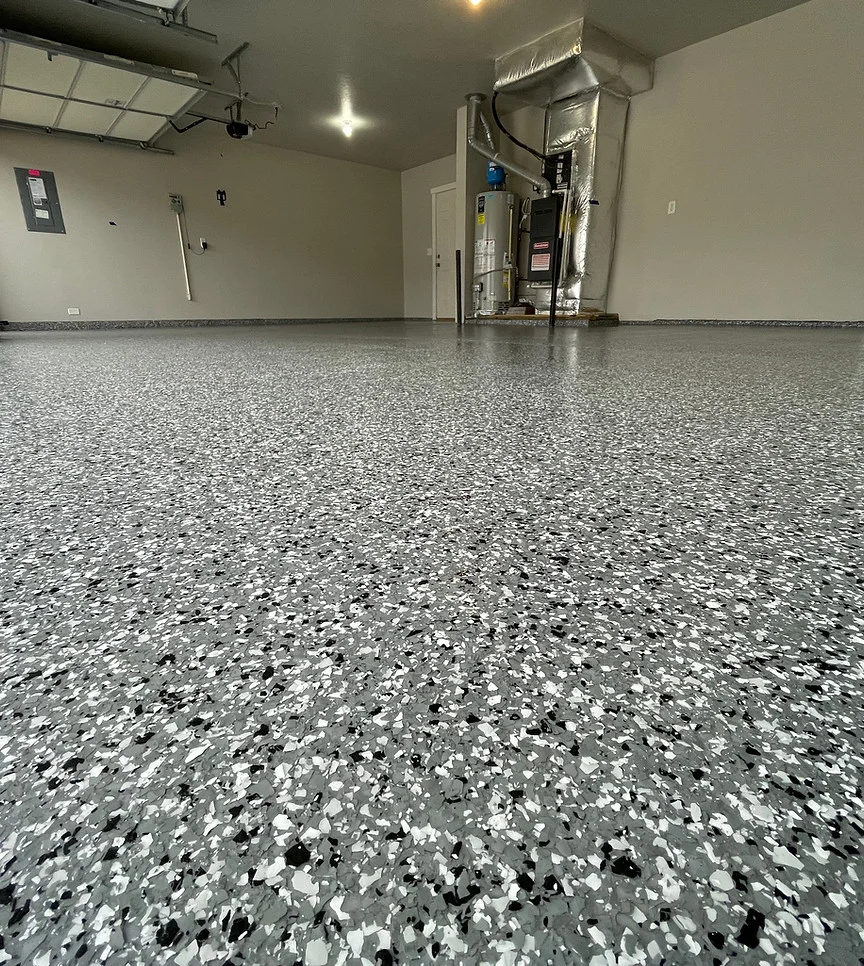
Epoxy flooring, by contrast, is a resinous coating system that is applied over prepared concrete and can be designed in different thicknesses and configurations to protect the slab from chemical exposure and wear (Sherwin-Williams High Performance Flooring). In short, polished concrete refines what is already there, while epoxy flooring builds a protective system on top of it. Yankee Coatings offers both as part of its primary commercial flooring services, along with commercial concrete coatings, stained concrete, and concrete sealing.
Choosing Based on Your Boise Facility's Conditions
There is no single right answer for every commercial floor. The better approach is to weigh a few project-specific factors before deciding:
- Slab condition: A slab that is structurally sound and suited to the desired finish is a strong candidate for polished concrete, which is planned around the existing slab and how the space is used.
- Chemical and spill exposure: Spaces with regular exposure to chemicals, oils, or frequent spills benefit from epoxy's protective barrier, since polished concrete is not chemical resistant.
- Traction needs: Smooth epoxy can become slippery when wet, but texture can be added to the system and tailored to the area's traffic, spills, and cleaning practices (Sherwin-Williams High Performance Flooring).
- Cleaning and maintenance routine: Consider how the floor will be cleaned and how quickly spills are typically addressed.
- Desired appearance: Polished concrete is generally better suited to spaces that want the appearance of the concrete itself.
Yankee Coatings has applied polished concrete finishes in commercial settings of meaningful scale, including polishing and sealing an agricultural warehouse of approximately 13,000 square feet, giving commercial clients a real reference point for larger-footprint projects.
Why Preparation Determines the Outcome
Whichever system you choose, preparation is not a minor installation step, it is part of the product decision itself. Inadequate surface preparation is the leading cause of epoxy coating failure (Sherwin-Williams High Performance Flooring), which is why Yankee Coatings emphasizes intensive concrete preparation and profiling, industrial-grade materials, and proper product selection on every project.
Moisture, cracks, and movement in the existing slab also need to be assessed before a coating or polished system goes down. According to Yankee Coatings' concrete profiling guidance, profiling alone does not resolve structural damage or ongoing moisture problems, so those issues need to be identified and addressed as part of the planning process. For eligible systems, Yankee Coatings' work is backed by a 15-year manufacturer-backed warranty, with specific terms determined by the system and written warranty documentation.
What Each System Costs
Cost is driven by different factors depending on the system, so a single per-square-foot number rarely tells the whole story.
| Flooring System | Starting Reference | What Changes the Price |
|---|---|---|
| Polished Concrete | Starting at $9 per square foot | Final pricing depends on the condition of the floor and overall project scope |
| Epoxy Flooring | Varies by project | Number of coats, overall thickness, design details, and resin chemistry |
Because epoxy scope can vary so much from one facility to the next, the most reliable way to budget accurately is to have the slab and intended use evaluated directly rather than relying on a general estimate.
Frequently Asked Questions
Can polished concrete handle commercial spills and cleaning chemicals?
Polished concrete is stain resistant, but it is not chemical resistant. Spills can stain the surface if they are not cleaned up promptly, which is an important consideration for facilities with frequent chemical exposure.
What should be checked in an existing concrete slab before choosing epoxy or polished concrete?
The slab's overall condition, along with moisture, cracks, and movement, should be assessed before committing to either system. Profiling can prepare a slab for a new finish, but it does not resolve structural damage or active moisture issues on its own.
How does slip resistance affect an epoxy floor's cleanability?
Epoxy can be finished smooth or with added texture. The right level of texture is chosen based on the space's traffic, spill frequency, and cleaning practices, balancing traction against ease of cleaning.
Get a Flooring Recommendation for Your Boise Facility
If you are weighing epoxy flooring against polished concrete for a commercial property in Boise or elsewhere in the Treasure Valley, Yankee Coatings can look at your slab and operating conditions to recommend the right system. Call (208) 996-4176 to talk through your project.